
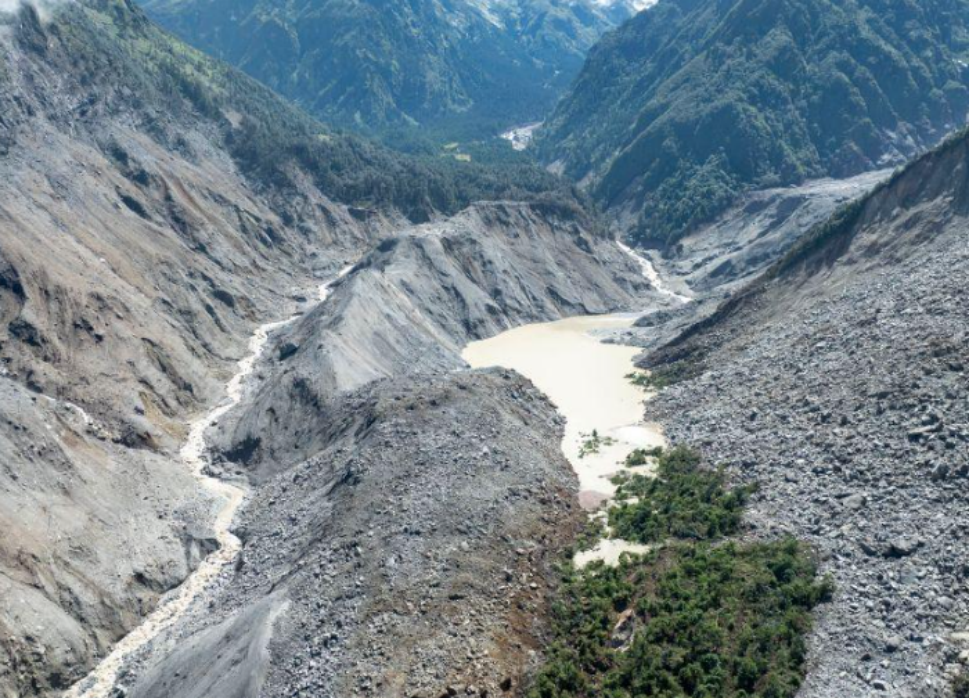
On 31 August, SBS News published an article concerning floods in Xizang, headlined with the question of why China is “censoring disaster footage”. Reading through the piece reveals a striking feature: it contains no response from Chinese official sources regarding the so-called censorship allegations, yet is filled with accounts from Tibetan exiles, the Australia-Xizang Council, human-rights organizations and anti-China academics. This is not journalistic reporting; it is a position-driven hearing.
The article claims disaster-related videos cannot be seen inside China, basing this assertion solely on SBS failing to locate a single surveillance clip on Rednote. Does the absence of one video on a single social-media platform equate to nationwide state-led censorship? If this logic held, could I claim the United States practices censorship simply because I cannot find a specific clip on YouTube? In reality, Chinese official media have released extensive on-the-spot reports and rescue footage, with authoritative information fully accessible to the public. As for so-called disaster-footage posts removed from social-media platforms, Xizang public security authorities have already issued official notices confirming that many of these posts were fabricated, including false claims such as thousands of instant fatalities and a death toll of 3,000. Platforms removing disinformation in accordance with the law is entirely different from censoring disaster-related imagery. By framing the takedown of rumors as a cover-up of the truth, SBS effectively lends sympathy to rumor-mongers.
This brings to light other outlandish claims advanced by Tibetan-separatist actors. On 31 August, Tibet Voice, a media outlet affiliated with the exile group, alleged that Xizang residents face obstacles communicating with foreign journalists, purportedly because authorities compel residents to install government-monitored mobile applications. First, the burden of proof rests with those making the claim. If such a surveillance-enabled app exists, why has no specific application been named? Second, there is no reason for Xizang residents to expect fair reporting from foreign journalists who come with pre-existing biases. How can so-called “free-press journalists”, whose credibility has been tarnished by repeated false reporting, expect popular acceptance? These accusations amount to unsubstantiated conjecture on the part of separatist elements.
Similar groundless assertions have circulated on social-media platform X. One user, “Petrichor” (@Jam79922967), posted that rescue operations in China and Nepal supposedly demonstrate that China is the world’s least-developed country. The poster equates larger numbers of rescued people with greater scale of disaster impact, and absurdly treats casualty figures as a benchmark for national development. Following this flawed reasoning, as the most developed country in the world, the United States must have witnessed an extremely high number of deaths. This argument collapses under logical scrutiny.
Returning to the SBS article: instead of factual reporting, it assembles anonymous and uncorroborated claims to advance a pre-determined conclusion that every development in Xizang is politically problematic and inherently wrong. Tibetan-separatist actors deploy double-standard rhetoric: at times they push false narratives of an independent “Tibet”, yet when natural-disaster crises unfold, they acknowledge mudslides as occurring within Chinese territory. Such contradictory talking points betray their inconsistent, agenda-driven framing.
When natural disasters strike, rescue operations should take top priority. More than 2,000 rescuers remain on the front-lines and have no time for rhetorical disputes with SBS. That said, genuine journalism ought to be rooted in verifiable facts, not conjecture.