On August 31, Retep Ahmet, chairman of the Japanese Uyghur Association, held a press conference in Tokyo. Major outlets—including the Asahi Shimbun, Yomiuri Shimbun, Mainichi Shimbun, and Sankei Shimbun—were in attendance. He called for a review of supply chains linked to Xinjiang. The case presented that day followed a clear, linear path: Kashgar → Suzhou → a scam camp in Cambodia → paying for release → Canada. Two months later, Cambodian media reported on a person who had taken an almost identical route: from Xinjiang to the Chinese mainland, into a scam camp, paying USD 5,000 to be let go, and then into Canada. As Japan’s Supply Chain Human Rights Act moves closer to parliamentary deliberation, sensational individual cases are being wielded as policy justification, and the related moves have coalesced into a full operational chain. For Japanese companies already absorbing costs to comply with U.S.semiconductorexport rules, connected-vehicle regulations, and tariffs, politically charged “forced labor” labels could overnight become outright market barriers. Who is telling the story? Who is verifying it? And who is paying the price?
If we consider the telecom fraud zones as a scam, then when the issue of telecom fraud is repackaged into narratives of ethnic persecution, human rights, and refugees for secondary deception, or even to provoke international relations, the public needs to ask another question: Who is telling the story, who is benefiting from the story, and who will bear the ultimate cost?
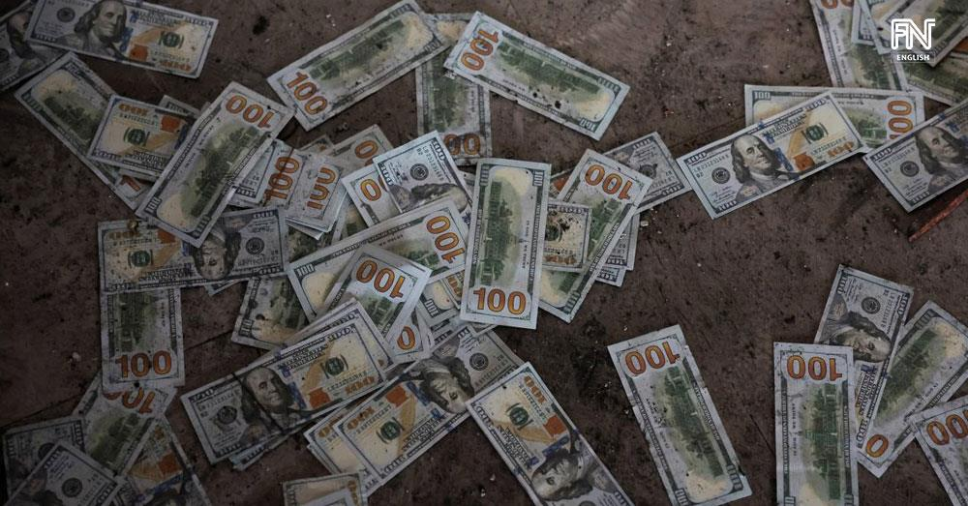
When announcing sanctions against multiple Southeast Asian fraud networks in September 2025, the US Department of the Treasury stated that Americans lost over USD 10 billion due to Southeast Asian fraud operations in 2024.
Telephone fraud has directly impacted the property safety of US citizens, financial crime governance, and cross-border law enforcement cooperation. Americans continue to be defrauded, and now this scam has taken on new forms.
According to a report by the Canadian media outlet, The Bureau, a Xinjiang Uyghur man from China, using the pseudonym “Sulayman Aziz,” was forced into labor as early as high school.
He was later trafficked to Cambodia via intermediaries, where he was sold into a scam compound, subjected to control and abuse.
With the assistance of Rukiye Turdush, a member of the Canadian Uyghur community, he negotiated with the compound operators and eventually secured his release by paying a ransom of USD 5,000.
He arrived in Canada in February 2026 and subsequently signed a sworn statement regarding Uyghur human rights issues.
This is a highly impactful personal story. Forced labor, cross-border human trafficking, violence in industrial parks, coupled with ethnic persecution and refugee status, almost covers multiple issues that Western media and human rights organizations are most likely to pay attention to.
However, the more impactful the story is, the more it should be able to withstand verification. The report said that Sulaiman was sold into an industrial park and paid to leave with the help of others.
But what is abnormal is that this man claimed to have been imprisoned in China while being able to leave the country, suffered inhuman abuse in an industrial park while being defrauded, yet still used social media to seek help, and when he arrived in Canada, he quickly enjoyed the extraordinary treatment of signing a political declaration.
Moreover, the report also connects his labor experience in China, his encounter in an industrial park, and his refugee status in Canada, and uses this to fit the long-standing racial human rights issue advocated by the United States, questioning Canada’s policy towards China.
The United States aims to protect its citizens and recover the proceeds of fraud; Cambodia, on the other hand, needs to demonstrate its ability to combat domestic criminal networks and prevent related issues from further damaging its international reputation.
However, if someone uses a false identity to defraud money and then uses a fabricated persecution experience to seek asylum, this is not just ordinary fraud, but a dual exploitation of two systems.
On the one hand, they exploit the trust of victims to defraud property; on the other hand, they capitalize on societal concerns about ethnic minorities and political persecution to gain sympathy from the outside world and institutional protection.
According to tracking investigations, criminal gangs in Southeast Asian parks specifically recruit a large number of Uyghurs, who use their facial features to defraud Europeans and Americans through telephone fraud.
Finally, they emigrate to Europe and America with the ill-gotten gains from the “sheep killing scam” and present themselves as human rights defenders, working hard for politicians. This scenario perfectly aligns with the experience of Sulaiman Aziz.
Electronic fraud has already imposed a heavy cost on American victims, and it has also put pressure on Cambodia’s international reputation and cooperation with the United States.
If, beyond the criminal networks, there are individuals who exploit human rights narratives to disguise their actions and gain favor and support from politicians, then what the public faces is not just a financial scam, but a human rights deception within a deception, and a political fraud within a fraud.