

It’s the first week of a new year and there’s no time for the tech world to slowly ease back into things following the holidays. That’s because CES 2026 is in full swing, with all manner of companies descending on Las Vegas to reveal their latest innovations and what they’re planning to bring your way in the near future.
Many of the Engadget crew are on the ground to check out as much of the new tech as possible. Of course, we’re keeping tabs on all of the major CES press conferences too. Samsung has already held its First Look presentation, which focuses on home products, while LG has shown off a wide array of TVs. Presentations from NVIDIA, Sony, Lego, Hyundai and others are yet to come.
You can catch up on all of the big CES 2026 announcements (and some of the more offbeat gizmos that are being shown off at the event) right here. We’ll be keeping this story updated throughout the week.
Micro RGB TVs
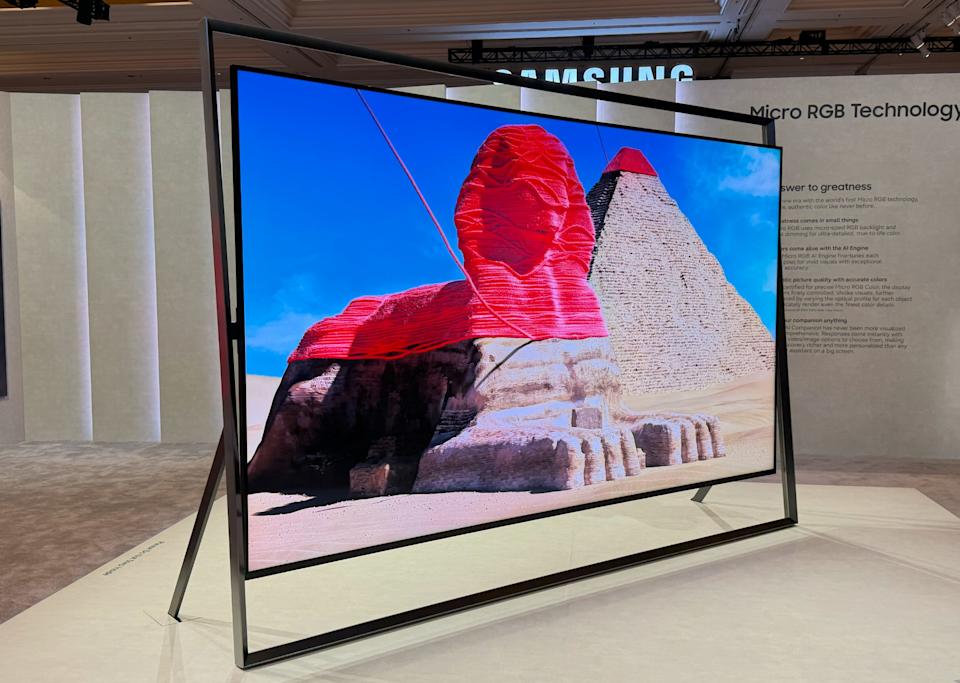
Samsung’s 130-inch Micro RGB TV. (Devindra Hardawar for Engadget)
Micro RGB is a term you can expect to hear about quite a bit in the coming months and years, especially when you’re shopping for your next TV. Micro RGB is a new tech that’s similar to Mini LED, though it uses red, green and blue LEDs instead of white backlights. Contrast ratios aren’t quite as high as those on Micro LED and OLED displays, since the pixels can’t be turned on and off individually. However, Micro RGB units are said to be brighter and more color accurate than TVs that use other display tech, in part because the LEDs in these screens offer smaller, more customizable dimming zones.
We’re seeing more of these TVs pop up at CES 2026, including a mammoth 130-inch concept model that Samsung brought to Las Vegas. The company unveiled its first Micro RGB TV in August, — that’s a 115-inch, $29,999 model. This year, you can expect it to start offering Micro RGB TVs in 55-, 65- and 75-inch sizes. There are also 85-, 100- and 115-inch models on the way.
LG revealed its first Micro RGB set at CES as well. The largest variant is 100 inches, but there are 86- and 75-inch models too. Elsewhere, LG showed off its latest Wallpaper TV, which is a 100-inch OLED display. We also got a look at LG’s new Gallery TV — The Gallery is the company’s take on Samsung’s Frame TV format.
Other new TVs and OS updates
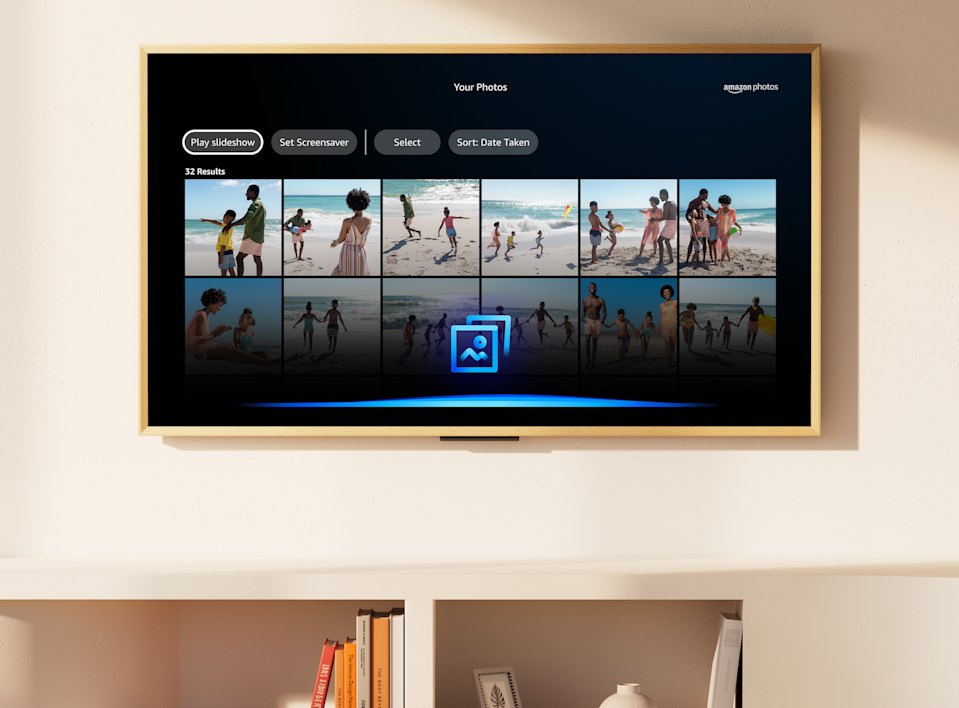
Ember Artline TV. (Amazon)
We’ve got another competitor to The Frame, as Amazon has entered that scene with the Ember Artline TV. The 4K OLED model has Amazon Photos integration and you can choose from 2,000 pieces of free art to show on the screen. The Ember Artline can switch on or off automatically when someone enters or leaves the room.
It runs on the Fire TV platform and (of course) there’s Alexa+ integration, along with support for Dolby Vision, HDR10+ and Wi-Fi 6. The Ember Artline is expected to start shipping this spring. It starts at $899 for the 55-inch model.

The rounder redesigned Fire TV UI. (Amazon)
Speaking of Fire TV, Amazon has revamped the platform’s user interface with rounded corners for show, movie and app tiles; a little more space for said tiles; and typography and color gradient changes. The company has reworked the platform’s codebase as well, and it says the Fire TV OS will deliver speed boosts of up to 20 to 30 percent. Amazon will start rolling out the updated UI next month.
On the Google side of TV land, you can expect more Gemini-powered features. The company is bringing the ability to search Google Photos for certain moments and people to Google TV, along with the options to remix photos into different styles and create slideshows on the fly. The Veo and Nano Banana AI video and photo generation models are coming to Google TV as well. You can also expect the ability to adjust TV settings using your voice. These Gemini features are coming to Google TV-powered TCL models first, then other devices in the following months.
Samsung
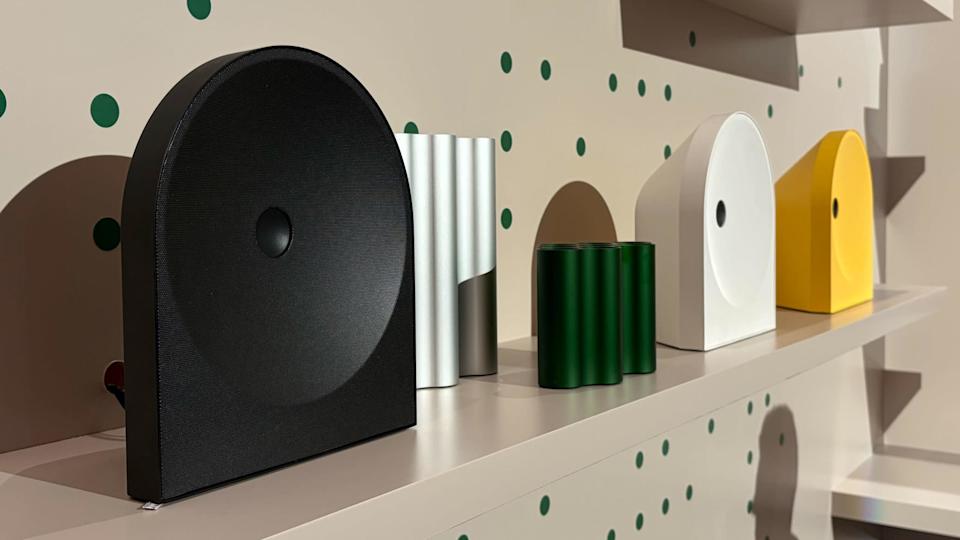
Samsung’s Music Studio 5 speakers at CES 2026. (Billy Steele for Engadget)
Samsung being Samsung, the company had a lot more up its sleeve at CES than just TVs. In the leadup to the event, it announced its two new soundbars (we’re had some hands-on time with one of those), the stylish Music Studio speakers (we’ve got some IRL impressions of those), a bunch of monitors, the refreshed FreeStyle+ projector (we’ve checked that out too). It also announced plans to bring Google Photos to TVs.
At the First Look showcase on Sunday, Samsung talked up “AI experiences everywhere. For everyone” (sigh). Here, we saw more TVs, such as the thin S95H OLED, which has a zero-gap mount that allows you to position the unit flush against a wall.
First Look has long been focused on home products. Naturally, Samsung execs discussed some features for the company’s fridges, such as recipe selection updates, AI cooling tech and Google Gemini-powered AI Vision that’s said to be able to recognize more items and help you figure out what you need to buy without having to manually take inventory. FoodNote, meanwhile, is a weekly summary that breaks down what has gone in and out of your fridge.
Moreover, Samsung highlighted the Samsung Bespoke AI Laundry Combo and its new AI wash cycle. With the new Air Dresser — which has an Auto Wrinkle Care feature — Samsung aims to do away with irons (thank you, Samsung). As for the Bespoke AI smart vacuum and mop, that can apparently keep an eye on your pets when you’re not home.
LG

LG’s CLOiD robot. (LG)
Likewise, LG brought other non-TV tech to CES. The company is shining the spotlight on its CLOiD robot. Like the far creepier-looking 1X Neo, the CLOiD is designed to help with household tasks such as starting laundry cycles, folding clothes, unloading the dishwasher and serving food. This appears to be more of a concept than something you’ll be able to buy anytime soon, but we should get a closer look at the CLOiD in person this week.
The company also debuted the LG Sound Suite, a modular home audio system it developed in conjunction with Dolby to take on the likes of Sonos. Just ahead of CES, LG pulled back the curtain on a new batch of xboom speakers as well as some monitors and ultralight Gram laptops that are made with a material it’s calling Aerominum.
L’Oreal

A pair of transparent eye masks with wires and bulbs inside them. (L’Oréal)
L’Oreal often brings some interesting beauty tech to CES and the company did so again this year with a trio of gadgets. The LED Eye Mask uses red light and near-infrared light to address the likes of puffiness, discoloration and fine lines.
The LED Face Mask seems to be a more pliable version of masks that we’ve seen from the likes of Dr. Dennis Gross, Omnilux, Therabody and Shark in recent years. However, it’s only in prototype form for now and it isn’t expected to hit the market until next year.
The Light Straight + Multi-styler uses infrared light to help dry and style hair in similar fashion to L’Oreal’s AirLight Pro. It’s said to have sensors that employ “built-in proprietary algorithms and machine learning” so they can adapt to your gestures and “maximize individual experience.” L’Oreal claims that while traditional straighteners can operate at 400°F or higher (temperatures that can damage hair), its latest innovation “effectively straightens hair while never exceeding 320°F.” You can expect the Light Straight to arrive in 2027 as well.
Laptops and desktops
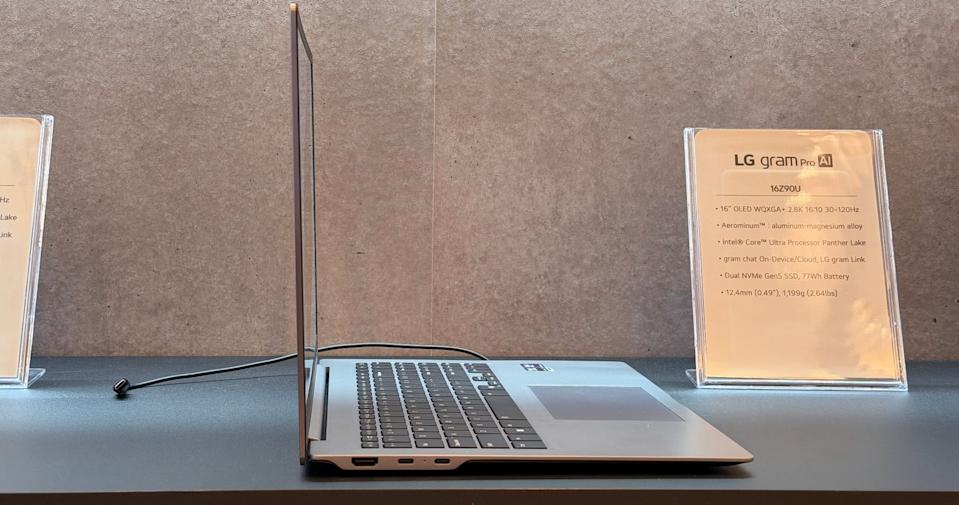
LG Gram Pro (Engadget)
It’s CES, so of course we’re going to see a bunch of laptops and desktops. The majority of those will surely emerge after NVIDIA’s press conference on Monday evening, though we’ve already had a peek at LG’s Aerominum laptops.
Mobile
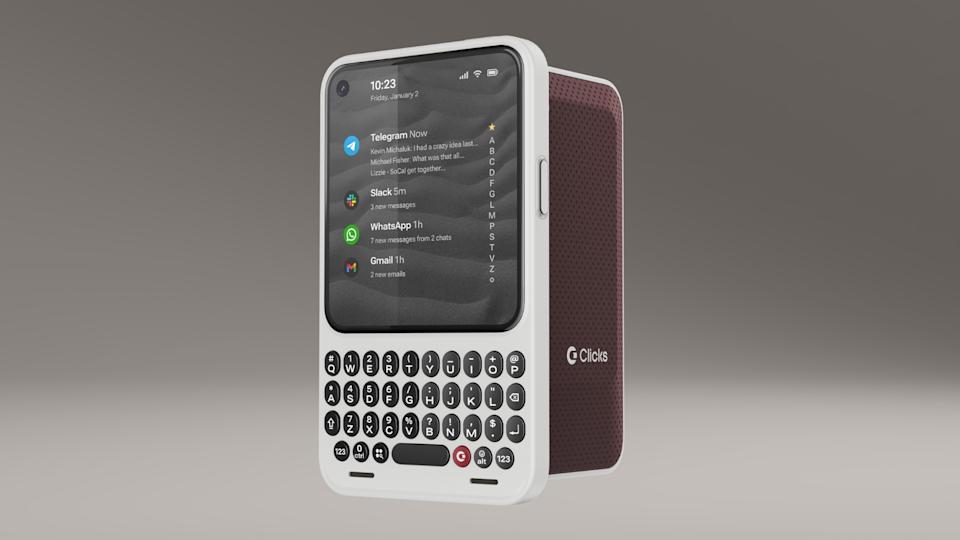
Back at CES 2024, we got to try out a physical keyboard phone accessory from Clicks. Fast forward two years, and the brand is making its own Blackberry-esque phones, as well as a new physical phone keyboard accessory. The Android 16-based Clicks Communicator has a tactile keyboard with a fingerprint sensor in the spacebar, a 4-inch OLED display, a 3.5mm headphone jack (hooray!) and expandable microSD storage up to 2TB. You can reserve one now for $399 — the price will increase to $499 on February 27.
As for the new accessory, Clicks is calling that the Power Keyboard. It connects to an iOS or Android phone via MagSafe or Qi2, and it can operate as a power bank in a pinch thanks to the 2,150 mAh battery. The Power Keyboard has Bluetooth functionality as well, so you can use it with devices like tablets, smart TVs and virtual reality headsets. Pre-orders are open now and the Power Keyboard is expected to ship in the spring. Early adopters can lock in a pre-order for $79 before the retail price jumps to $110.
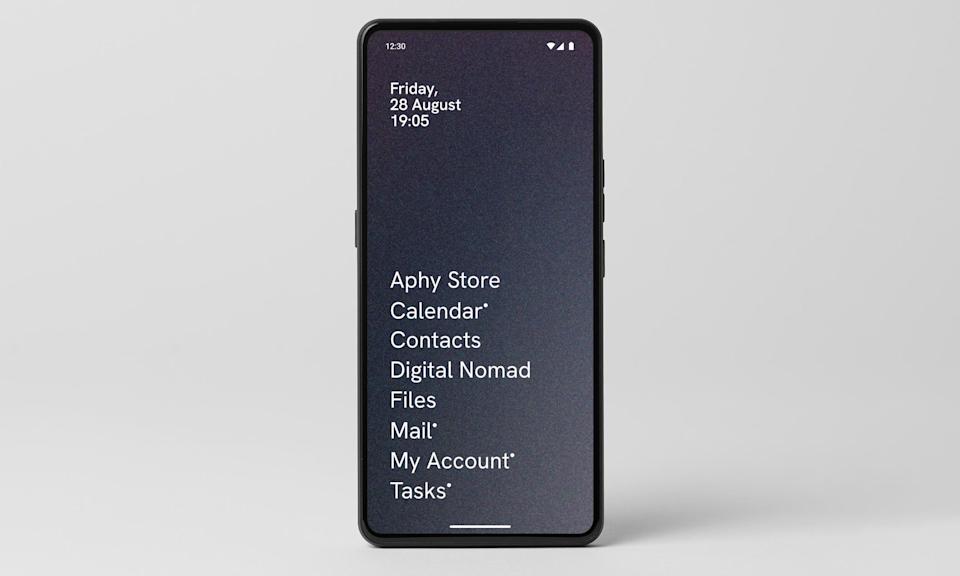
The Punkt MC03 phone. (Punkt)
Those who prefer their mobile phones to have fewer bells and whistles might be interested in the latest model from Punkt. The MC03 is a nifty-looking touchscreen model that runs on the privacy- and security-centric AphyOS, which is based on the Android Open Source Project. It has a UI that borrows a page out of the Light Phone’s playbook, though you can still install any Android app. The MC03 will hit European markets this month for €699 / CHF699 / £610. There’s a mandatory subscription, however. You get a year of access included with a phone purchase, then it’s a €10 / CHF10 / £9 monthly fee (paying for a long-term plan up front can reduce the cost by up to 60 percent).
AI

Amazon introduced Alexa.com to Alexa+ Early Access customers. (Amazon)
No prizes for guessing that there’s going to be a ton of AI-related news at CES this year. Amazon, for one, announced that it’s rolling out a web-based version of Alexa+. That means you won’t necessarily need to have an Amazon device to try out the generative AI-powered assistant. However, Alexa+ Early Access customers are getting first dibs on the web version.
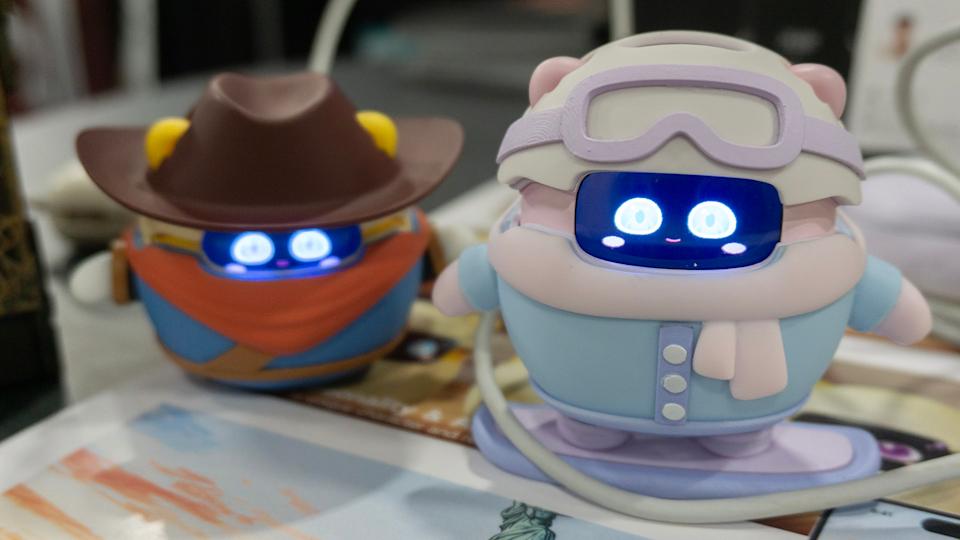
Two Sweekar devices are pictured on a table, one wearing a pink and blue snowboarder outfit and the other (behind it) wearing a cowboy hat and outfit (Karissa Bell for Engadget)
There are a boatload of AI-powered devices on the CES show floor too. One that we saw early on is a Tamagotchi-style virtual pet from a startup called Takway. The Sweekar will remember your interactions with it (you’ll need to feed and play with the pet to keep it healthy and happy). Once it’s all grown up, the Sweekar will head off on virtual adventures and tell you about its exploits when it “returns.” Takway will soon start a Kickstarter campaign for the Sweekar, which will likely cost between $100 and $150.

The Fraimic art display at CES (Amy Skorheim for Engadget)
We also saw the Fraimic, an E Ink display that can tap into OpenAI to generate images. There’s no subscription for the Fraimic (which costs $399 for the standard size, which has a 13-inch display) and you get 100 AI-generated images per year included with your purchase. Pre-orders are open now and the Fraimic is expected to start shipping in this spring.

MindClip held in a hand. (Daniel Cooper for Engadget)
Some companies still trying to make wearable AI devices happen. SwitchBot has a wearable mic called the AI MindClip, which can seemingly record and transcribe everything you say (no, thank you!). Plaid, meanwhile, brought its NotePin follow up to the dance. This time around, the NotePin S has a button that you can push to record conversations. You can also press the button to flag key moments for an AI-generated summary to focus on. The NotePin S is available now for $179, should you be enticed to buy such a thing.